
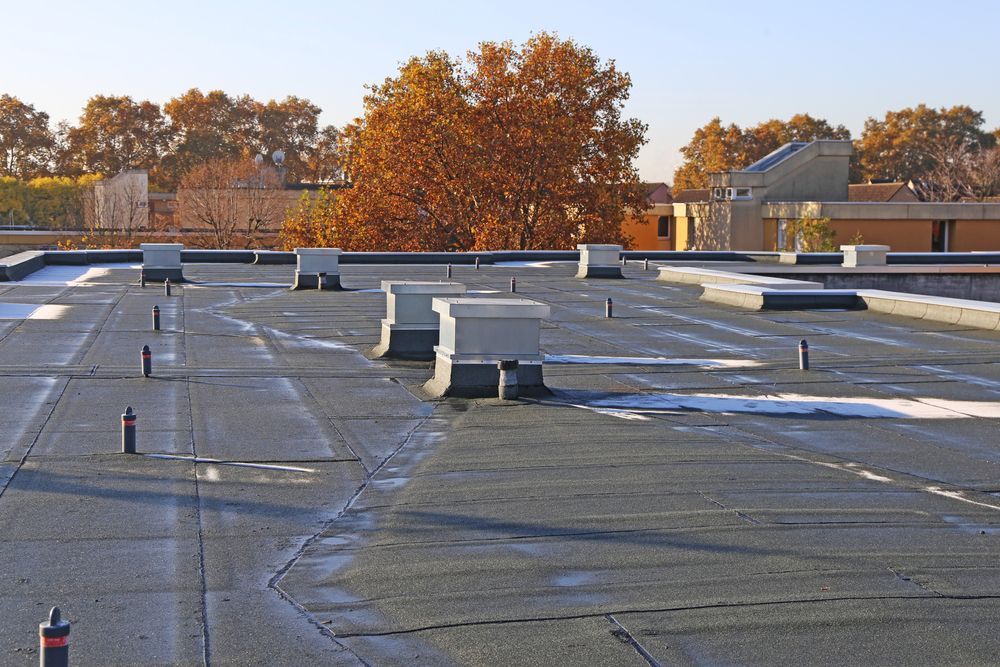
Multi-Layer Protection for Flat Surfaces
Built-up roof systems in Kirtland for commercial properties requiring durable, long-lasting flat roofing
A built-up roof system consists of alternating layers of bitumen and reinforcing fabric, creating a thick, multi-ply membrane that resists both weather exposure and foot traffic. Lampson Roofing LLC installs and maintains these systems for commercial flat roofs where durability and lifespan matter more than installation speed. The layered construction means the roof can handle maintenance workers walking across it, withstand ponding water better than single-ply systems, and provide redundancy—if one layer develops a small breach, the layers below continue to protect the structure.
The installation process involves applying hot or cold bitumen between layers of reinforcing felt, building up thickness that creates a seamless, monolithic surface. Each layer bonds to the one below, so the finished roof functions as a single waterproof barrier rather than a sheet that can pull away at seams. This approach works well for roofs that see regular foot traffic from HVAC maintenance or other equipment servicing, since the thickness absorbs impact without tearing.
Request a system evaluation to determine whether your current built-up roof needs maintenance, targeted repair, or full replacement.
Why Multi-Layer Construction Extends Roof Lifespan
Built-up roofing gains its durability from redundancy—multiple plies mean that minor damage to the top layer doesn't immediately compromise the waterproofing below. The thickness also provides more thermal mass than single-ply membranes, which can help moderate temperature swings in the building. Maintenance becomes straightforward because you can often repair localized damage by adding new layers over the affected area without tearing off the entire roof.
After installation or repair, the roof surface appears uniform and slightly textured, without the bubbling or splitting that indicates trapped moisture or poor adhesion. Water sheds toward drains without collecting in depressions, and the roof supports foot traffic without showing indentations or tears. You won't see the reflective cracking or seam separation common in aging single-ply systems, and the building interior stays dry even during sustained storms.
This service includes evaluating the existing roof structure to confirm it can support the additional weight of a built-up system, since the multiple layers add more load than lighter membranes. The work focuses on waterproofing and layer adhesion, but it doesn't cover structural reinforcement if the decking or supports have deteriorated beyond what the roofing process addresses.
What Property Owners Usually Ask
Questions about built-up roofing often involve how the system compares to newer options, what maintenance it requires, and how to assess its remaining lifespan.
What makes a built-up roof more durable than single-ply membranes?
The multiple layers provide redundancy, so damage to one ply doesn't immediately cause leaks, and the thickness resists punctures from foot traffic or debris better than thinner materials.
How long does a properly maintained built-up roof system last?
With regular inspections and timely repairs, these systems often perform for 20 to 30 years, though lifespan depends on drainage quality, maintenance frequency, and exposure to extreme weather.
When does a built-up roof need maintenance versus full replacement?
Maintenance works when surface wear is limited to the top layer and the underlying plies remain intact, but replacement becomes necessary when water has penetrated multiple layers or when the roof shows widespread blistering and delamination.
Why do built-up roofs sometimes develop blisters or bubbles?
Blisters form when moisture or air gets trapped between layers during installation, or when water penetrates through a breach and vaporizes under heat, creating pressure that lifts the upper plies.
How does weather in Kirtland affect built-up roofing performance?
Freeze-thaw cycles can stress the bitumen layers, especially if water infiltrates through cracks, and snow load requires confirming the structure supports the roof's weight plus seasonal accumulation.
Lampson Roofing LLC provides comprehensive assessments that check layer adhesion, drainage function, and surface condition to help you decide whether repair extends the roof's service life or replacement makes more sense. Schedule an inspection to review your built-up roof system and plan appropriate next steps.