
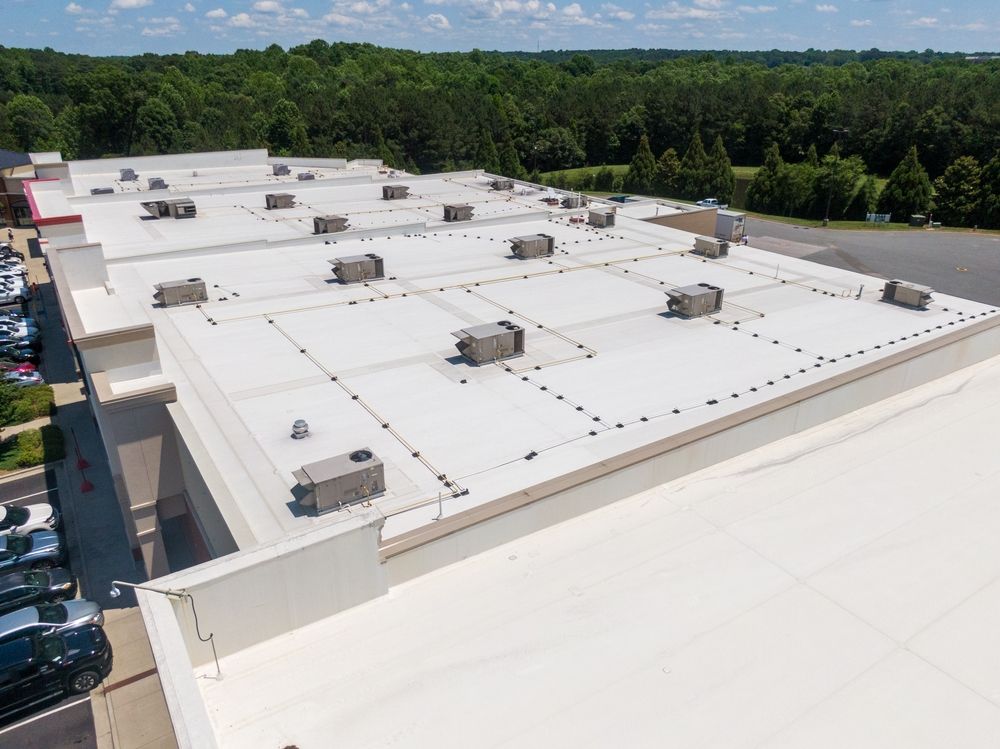
Reflective Membranes That Lower Cooling Costs
TPO roofing in Kirtland for commercial buildings seeking energy-efficient flat roof solutions
Heat buildup on a dark roof surface drives up air conditioning costs during summer months, especially on commercial buildings with large, flat roof areas that absorb and radiate heat into the interior. TPO roofing uses a white or light-colored single-ply membrane that reflects sunlight instead of absorbing it, reducing the thermal load on the building and cutting energy use. Lampson Roofing LLC installs and services TPO systems for commercial properties where the reflective surface delivers measurable savings on cooling costs while providing durable, low-maintenance waterproofing for flat roofs.
The installation process involves mechanically fastening or fully adhering large sheets of TPO membrane to the roof deck, then heat-welding the seams to create watertight joints that won't separate under wind uplift or thermal expansion. The welded seams bond the material at a molecular level, creating connections stronger than the membrane itself, which prevents the seam failure common in adhesive-based systems. TPO's reflective properties reduce surface temperature by 40 to 50 degrees compared to darker membranes, which translates to less heat transfer into the building.
Request a detailed estimate to evaluate energy savings and installation requirements for your commercial roof.
What You Notice Once TPO Installation Is Finished
TPO roofing creates a bright, uniform surface that stays significantly cooler to the touch than traditional dark membranes, even in direct summer sun. The heat-welded seams form continuous, raised lines across the roof where the material has been fused together, creating visible evidence of the sealed joints that prevent water infiltration. The membrane resists punctures and tears better than older single-ply options, handling foot traffic from maintenance crews without developing the stress cracks that show up in less durable materials.
After the system is in place, you'll notice the building's interior stays cooler during peak afternoon hours without running the air conditioning as hard, and you won't see the ceiling stains or water damage that indicate roof leaks. The surface sheds water quickly without the ponding that degrades other membranes, and the reflective finish maintains its brightness for years without the fading or chalking that reduces energy benefits on lower-quality products.
The service covers membrane installation and seam welding, along with evaluating drainage and roof deck condition. It doesn't include replacing insulation below the membrane or correcting structural issues if the roof deck itself has failed, though the inspection identifies those conditions so you understand the full scope of work needed for a complete roofing solution..
Questions Before Starting Your Project
Building owners considering TPO often ask about energy savings, how the material holds up long-term, and what differentiates quality installations from substandard work.
How much can TPO roofing reduce cooling costs compared to a dark membrane?
Reflective TPO typically cuts roof surface temperature by 40 to 50 degrees, which can reduce air conditioning load by 10 to 20 percent depending on building insulation, roof size, and climate conditions.
What causes TPO seams to fail even when the rest of the roof looks fine?
Seam failure usually results from improper welding temperature during installation, inadequate overlap between sheets, or contamination on the membrane surface that prevented full bonding when the seam was heated.
When should a TPO roof be replaced instead of repaired?
Replacement becomes necessary when the membrane shows widespread cracking from UV degradation, when seam failure is extensive enough that re-welding isn't practical, or when the material has become brittle and no longer flexes under pressure.
Why does TPO require less maintenance than built-up or modified systems?
The single-ply design has fewer layers to delaminate, the reflective surface stays cooler and degrades slower, and the welded seams don't rely on adhesives that break down over time.
How do Kirtland winters affect TPO membrane performance?
TPO remains flexible in freezing temperatures better than PVC, and the light color helps minimize ice formation from radiant heat loss, though snow load and ice damming at drains still require attention to prevent ponding when melt-water can't drain.
Lampson Roofing LLC assesses your roof deck, drainage setup, and existing membrane condition to determine whether TPO installation makes sense for your building and what preparatory work ensures long-term performance. Call (440) 655-9666 to discuss your commercial roofing needs and schedule an on-site evaluation.