
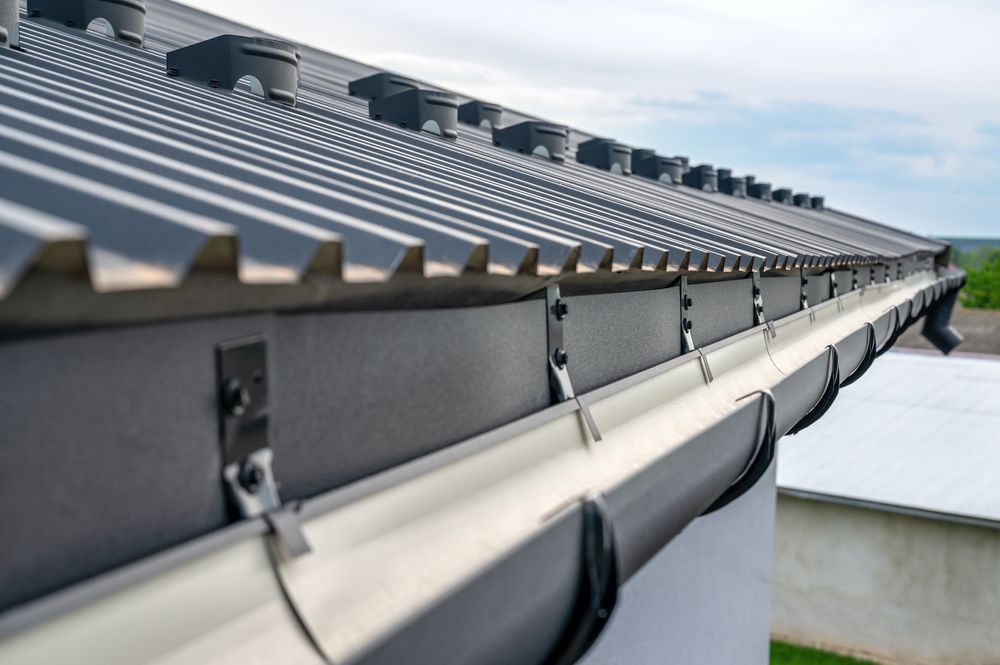
Drainage That Actually Prevents Foundation Damage
Gutter Installation and Repairs in Kirtland for properties experiencing water buildup and structural deterioration
Water that isn't directed away from a building flows down siding, pools around foundations, and saturates soil in ways that cause basement leaks, foundation cracks, and landscape erosion. Gutters and downspouts control this water by capturing roof runoff and channeling it to locations where it won't undermine structural integrity. When gutters leak, sag, or disconnect from downspouts, they fail to perform this function, and property owners see the consequences in wet basements, settling foundations, and damaged siding. Lampson Roofing LLC installs new gutter systems and repairs existing ones for both residential and commercial properties across Kirtland.
Installation involves sizing gutters appropriately for roof area and rainfall intensity, securing them with proper slope toward downspouts, and positioning discharge points away from foundations. Repair work addresses leaks at seams and joints, reattaches loose sections, and replaces damaged components that no longer move water effectively. The gutters must integrate with the roofing system to catch runoff without creating additional leak points or ice dam conditions.
Request a gutter system evaluation to identify current drainage issues and review installation or repair options.
What You Notice Once Gutter Systems Function Correctly
Functional gutters move water from roof edges to controlled discharge points, preventing the overflow and misdirection that cause property damage. Properly installed systems include adequate hangers to prevent sagging, sealed seams to stop leaks, and downspout extensions that carry water at least several feet from foundations. The slope must be sufficient—typically one-quarter inch per ten feet—to keep water moving toward outlets rather than pooling in sections where debris accumulates and mosquitoes breed.
After installation or repair, you'll notice that water no longer cascades over gutter edges during rain, basement walls stay dry during storms, and soil around the foundation stops eroding into channels and depressions. Siding remains clean rather than streaked with dirt and algae from constant water exposure, and ice dams along roof edges become less frequent because water exits the roof instead of backing up under shingles. These changes protect both immediate comfort and long-term structural integrity.
The service applies to both residential and commercial properties, though commercial buildings often require larger gutter capacity due to greater roof area and higher runoff volumes. Seamless gutters reduce leak potential compared to sectional systems, and material choice—aluminum for affordability, copper for longevity—depends on budget and aesthetic priorities. Understanding these options helps property owners select systems that match their specific drainage challenges and maintenance preferences.
Answers to Frequent Service Questions
Property owners evaluating gutter work typically want to understand how installation decisions affect performance and what repairs actually accomplish.
What causes gutters to leak at seams and corners?
Seams on sectional gutters rely on sealant and connectors that degrade over time from thermal expansion, UV exposure, and freeze-thaw cycles common in Kirtland's climate. Once sealant fails, water escapes at joints rather than flowing to downspouts, which defeats the entire drainage system and sends water directly onto foundations or siding below the leak.
How do gutters prevent foundation problems?
By capturing roof runoff and directing it away from the building perimeter, gutters prevent soil saturation that causes hydrostatic pressure against foundation walls. Without this controlled drainage, water accumulates around footings, seeps through foundation cracks, and creates the persistent dampness that leads to basement flooding and structural settling.
What determines the correct gutter size for a building?
Roof area, roof pitch, and local rainfall intensity all factor into capacity requirements. Steeper roofs shed water faster, which requires gutters that can handle higher flow rates, and larger roof areas generate more total runoff. Undersized gutters overflow during heavy rain, while properly sized systems move all water to downspouts even during peak storm conditions.
When should existing gutters be repaired versus replaced entirely?
If damage is localized—a single leaking seam, a detached section, or a few damaged hangers—repair typically makes sense. When multiple leaks exist, large sections sag, or corrosion has thinned the metal throughout the system, replacement offers better long-term value and avoids repeated repair calls for a system that's reached the end of its functional life.
Why does proper slope matter for gutter performance?
Slope creates the gravity-driven flow that moves water toward downspouts rather than letting it sit in low spots. Standing water accelerates corrosion, provides mosquito breeding habitat, adds weight stress to hangers, and reduces effective capacity during the next rainfall because the gutter is already partially full before new water arrives.
Lampson Roofing LLC addresses gutter installation and repair needs for properties throughout the service area, working to prevent the water damage that results from failed drainage systems. Reach out to schedule an evaluation and receive specific recommendations for your property.