
Flexible Roofing That Handles Temperature Swings
Modified roof systems in Kirtland for flat or low-slope commercial roofs needing durable, adaptable waterproofing
Asphalt-based modified roofing systems use polymer additives that keep the membrane flexible even when temperatures drop, preventing the cracking that happens when rigid materials contract in cold weather. You need this system if your commercial building has a flat or low-slope roof that experiences wide temperature ranges between summer heat and winter cold. Lampson Roofing LLC installs and repairs these systems where the flexibility of the modified bitumen allows the roof to expand and contract without losing its waterproofing seal, addressing the thermal stress that causes traditional asphalt to fail prematurely.
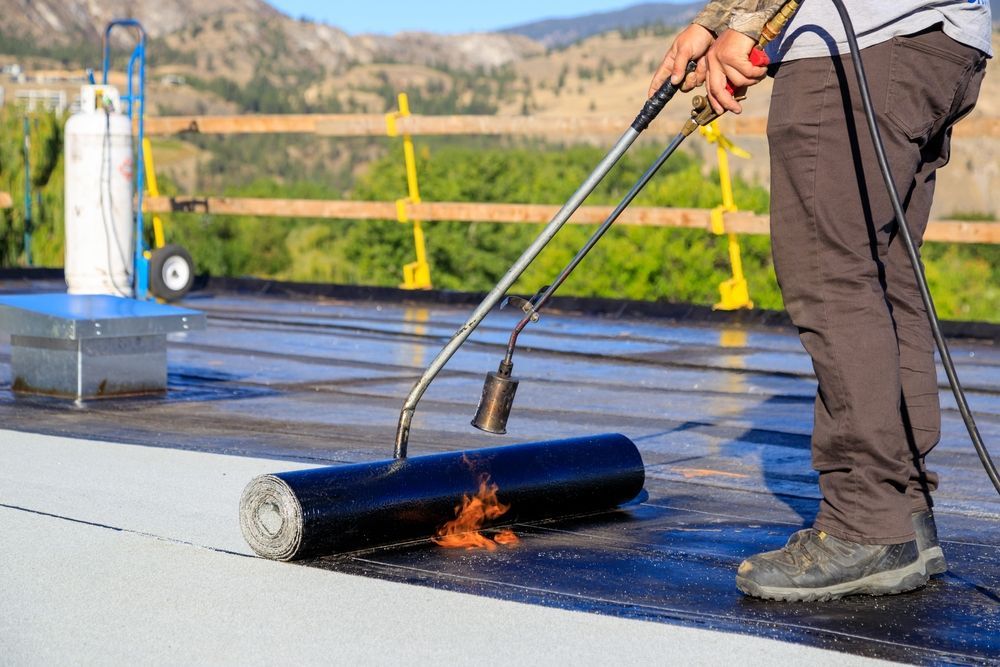
The installation involves rolling out sheets of modified bitumen and adhering them to the roof deck using heat, cold adhesive, or mechanical fasteners, then sealing the seams to create a continuous waterproof barrier. The polymer modification gives the material a rubber-like quality that absorbs building movement and temperature changes without tearing, which matters for structures that shift slightly with seasonal conditions or that sit on substrates that expand and contract.
Arrange a roof inspection to evaluate whether your current system shows signs of thermal stress or if waterproofing has degraded..
What Happens After Modified Bitumen Completes
Modified bitumen roofing creates a surface that remains pliable through seasonal temperature shifts, so it doesn't develop the stress cracks that rigid materials show after years of expansion and contraction. The seams stay sealed because the material retains enough flexibility to move with the roof deck rather than pulling apart when the substrate shifts. This adaptability extends the waterproofing lifespan, especially in climates where temperature swings stress less flexible systems.
Once installed, the roof sheds water consistently without the seam separation or surface cracking visible on older roofs, and the building interior stays dry during rain and snowmelt. The membrane surface shows a uniform appearance without the bubbling or splitting that indicates adhesion failure, and you won't see ponding water in areas where the roof should drain. The material holds up under foot traffic from maintenance work without tearing or creating weak points that turn into leaks.
This service focuses on the membrane itself and includes evaluating drainage to confirm water moves off the roof properly. It doesn't extend to correcting structural slope issues if the roof deck was built without adequate pitch, though those conditions get identified so you understand what affects long-term performance beyond the membrane installation..
Answers to Frequent Service Questions
Commercial property owners often want to know how modified systems compare to other flat roof options, what affects their longevity, and when replacement becomes necessary.
What makes modified bitumen different from standard asphalt roofing?
The polymer additives give modified bitumen greater flexibility and elongation, allowing it to stretch and contract with temperature changes without cracking, which standard asphalt can't do as effectively.
How does installation method affect the roof's performance?
Heat-welded seams create a stronger bond than cold adhesive, but mechanical fastening offers easier repairs later—each method has trade-offs between initial seam strength and long-term serviceability.
When should you repair a modified roof versus replacing it entirely?
Repair works when damage is confined to specific areas and the rest of the membrane still shows good flexibility, but replacement is needed when the material has become brittle, shows widespread cracking, or no longer stretches under pressure.
Why do modified bitumen roofs sometimes develop leaks at seams?
Seam failure usually happens when installation didn't create full adhesion, when thermal cycling stresses a poorly bonded joint, or when foot traffic repeatedly flexes a seam that wasn't reinforced properly.
How do winters in Kirtland affect modified roofing systems?
The material's flexibility helps it handle freeze-thaw cycles better than rigid membranes, but accumulated snow load and ice damming at drains can still stress the system if drainage isn't maintained throughout winter.
Lampson Roofing LLC evaluates membrane condition, seam integrity, and drainage performance to recommend whether targeted repairs extend your roof's life or if full replacement provides better long-term value. Get in touch to schedule a detailed assessment based on your building's specific conditions.